
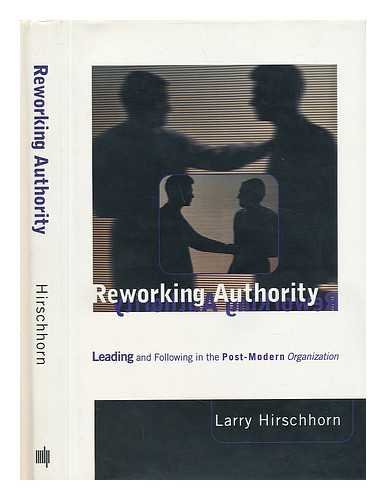
Reworking Authority: Leading and Following in the Post-Modern Organization (Organization Studies)
Product details
| Management number | 231979007 | Release Date | 2026/06/18 | List Price | US$7.84 | Model Number | 231979007 | ||
|---|---|---|---|---|---|---|---|---|---|
| Category | |||||||||
For many companies, the past decade has been marked by a sense of turbulence and redefinition. The growing role of information technologies and service businesses has prompted companies to reconsider how they are structured and even what business they are in. These changes have also affected how people work, what skills they need, and what kind of careers they expect. One critical change in how people work, argues Larry Hirschhorn, is that they are expected to bring more of themselves psychologically to the job. To facilitate this change, it is necessary to create a new culture of authority—one in which superiors acknowledge their dependence on subordinates, subordinates can challenge superiors, and both are able to show their vulnerability.In the old culture of authority, people suppressed disruptive feelings such as envy, resentment, and fear of dependency. But by depersonalizing themselves, they became "alienated"; in the process, the work of the organization suffered. In building a new culture of authority, we are challenged to express these feelings without disrupting our work. We learn how to bring our feelings to our tasks.The first chapters of the book examine the covert processes by which people caught between the old and new culture of authority neither suppress nor express their feelings. Feelings are activated but not directed toward useful work. The case studies of this process are instructive and moving. The book then explores how organizations can create a culture of openness in which people become more psychologically present. In part, the process entails an understanding of the changes taking place in how we experience our own identity at work and that of "others" in society at large. To do this, the book suggests, we need a social policy of forgiveness and second chances. Read more
Bestseller ranking
Leadership & Motivation



Customers who viewed this product also viewed
Grey Sofas



Correction of product information
If you notice any omissions or errors in the product information on this page, please use the correction request form below.
Correction Request Form